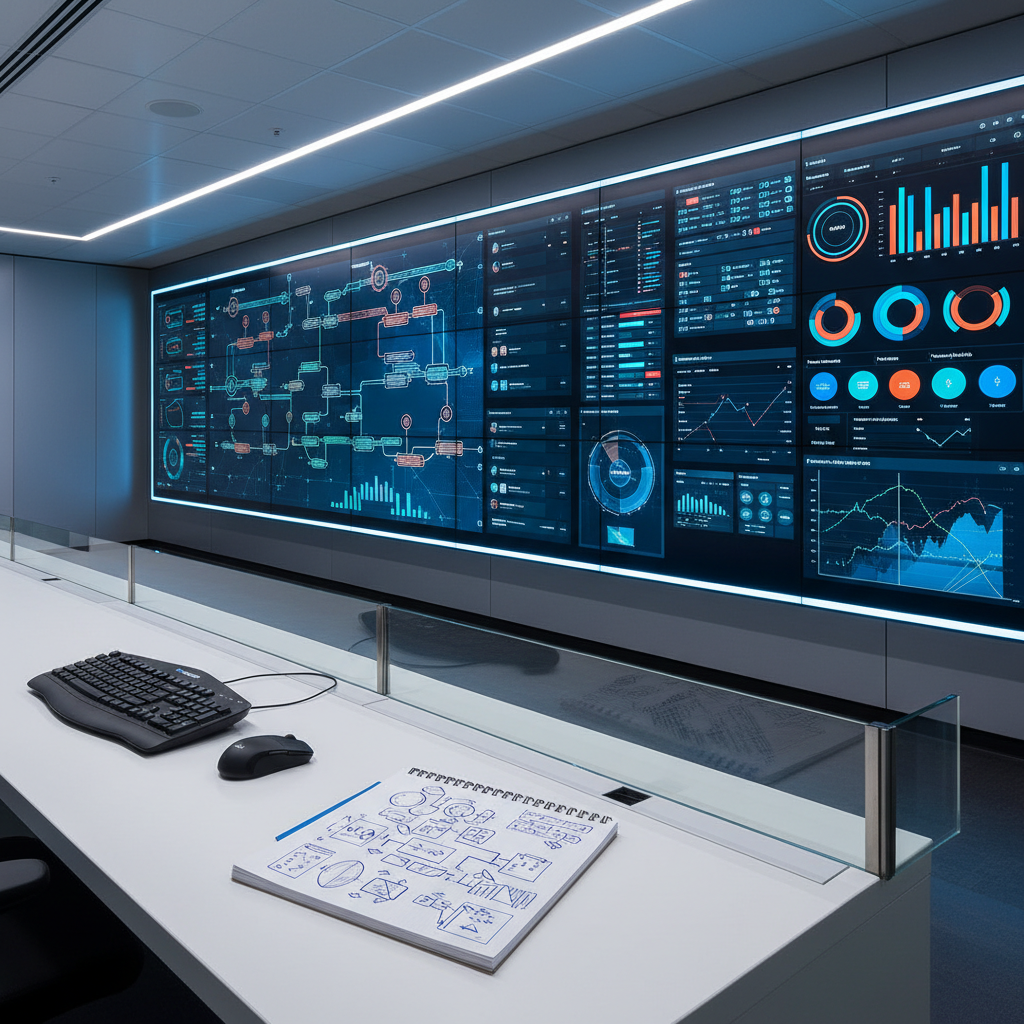
A high-tech yet realistic clinical command center focused on pharmacy and healthcare systems, with wall-mounted displays showing abstracted patient flow diagrams, medication safety dashboards, and color-coded alerts, all intentionally free of readable text. In the foreground, a large clean desk holds a keyboard, a mouse, and a notebook open to a page of schematic process sketches. Cool, even LED lighting illuminates the room, reflecting off glass and brushed metal surfaces to create a precise, analytical atmosphere. Shot from a slightly elevated angle with deep focus, the photographic image highlights the integration of data, workflows, and medication optimization, conveying systems thinking and professional oversight without showing any people.

About

Clinical pharmacist, educator, and systems thinker exploring safer medication use and thoughtful AI in pharmacy practice.

About

From Bedside Practice to Systems

My training in clinical pharmacy, MTM, and informatics sits alongside daily frontline practice, where workflow gaps are impossible to ignore. I translate those real pressures into practical frameworks, tools, and CE that prioritize patient safety and clear clinical thinking.
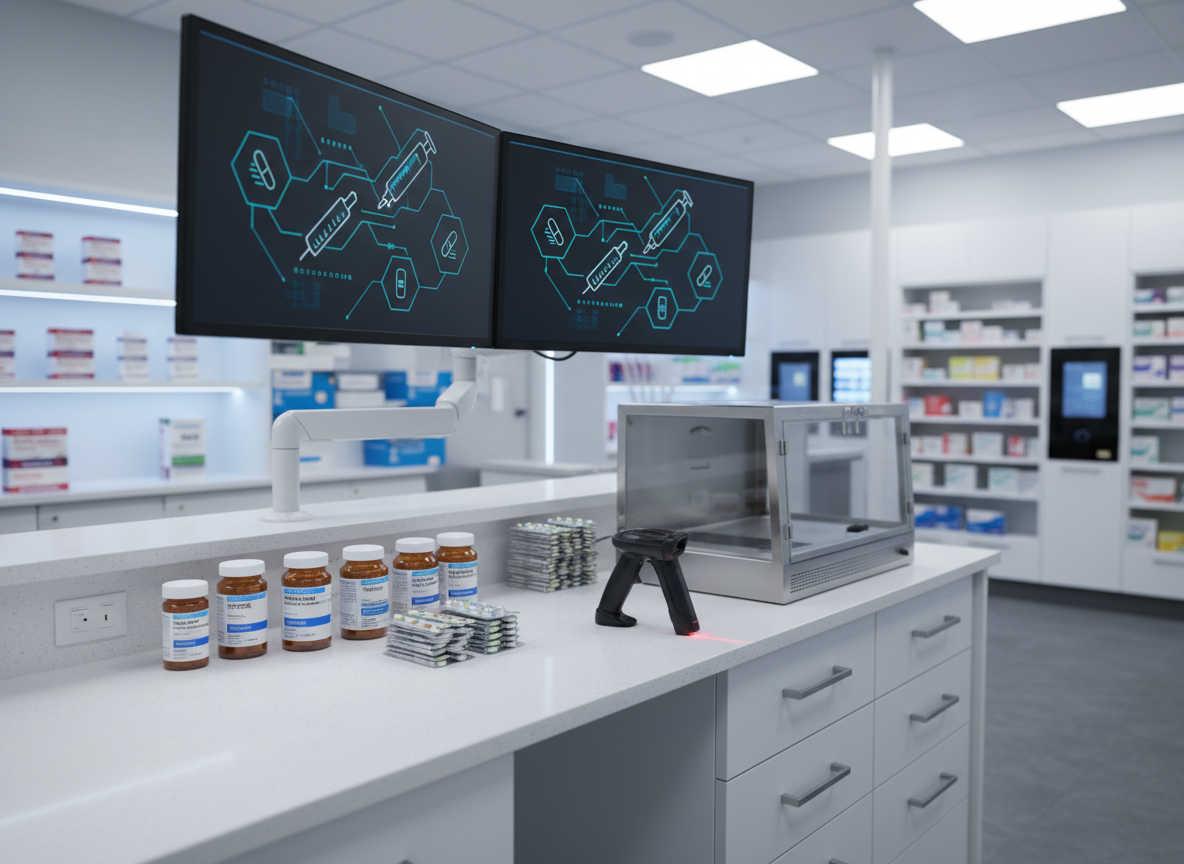
A sleek, organized clinical pharmacy workstation without any people, featuring dual computer monitors displaying abstract graphs and medication icons, a tidy counter with clearly labeled pill bottles, unit-dose blister packs, and a barcode scanner resting beside a compact laminar airflow hood. The scene is set in a modern hospital pharmacy with clean white cabinetry and subtle blue accents. Cool, diffused overhead lighting creates soft reflections on the stainless-steel surfaces and polished countertop, emphasizing a calm, controlled environment. Photographic realism at eye level with a slightly wide angle, showcasing depth into the room where automated dispensing cabinets and shelving fade into a gentle bokeh, conveying professional credibility, safety, and systems-level organization.

Testimonials

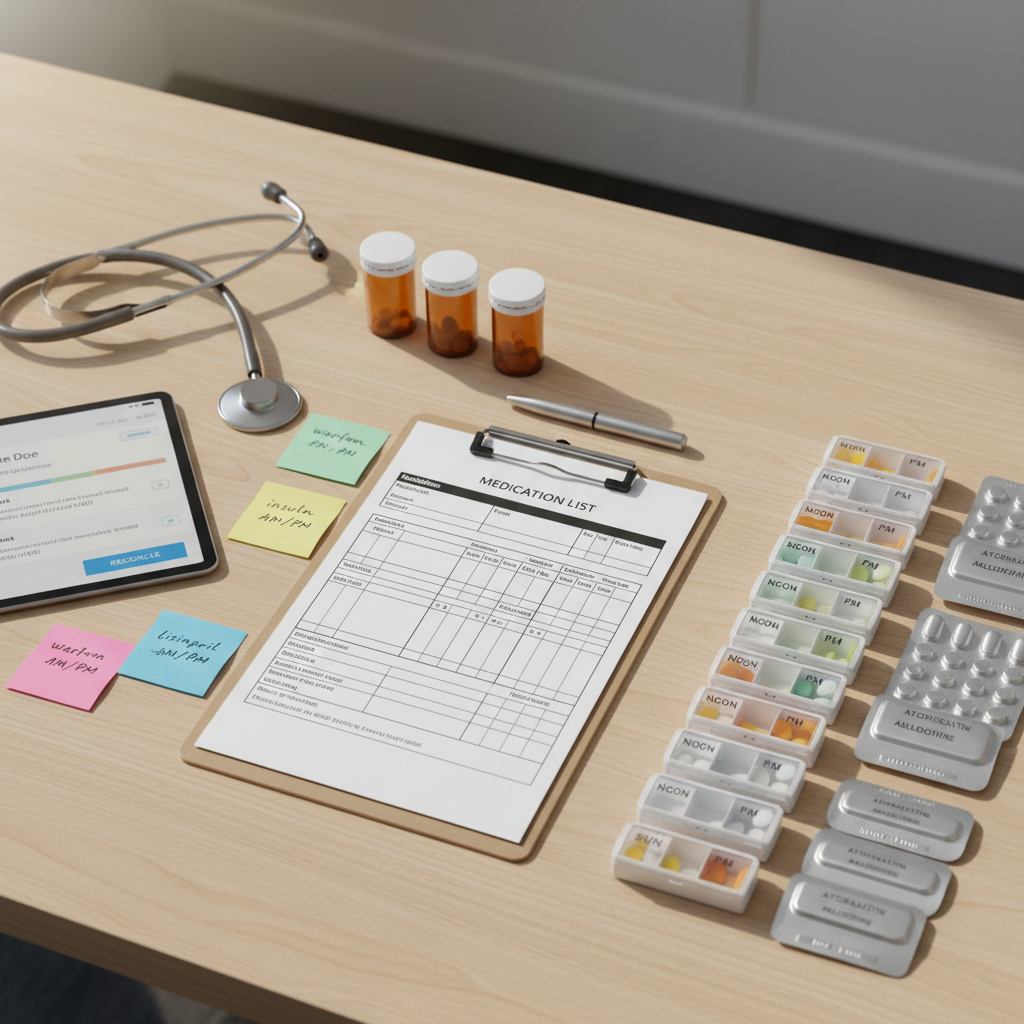
A close-up, overhead photographic view of a medication reconciliation workspace with no people present: a clipboard with a neatly formatted medication list, color-coded sticky notes, a tablet displaying a simplified electronic health record interface, and an array of clearly labeled pill organizers and blister packs arranged in precise rows. The desk surface is a light wood laminate with a stethoscope, non-branded pill bottles, and a pen aligned methodically. Soft, natural daylight from an unseen window bathes the scene, casting gentle shadows and creating a calm, thoughtful mood. The composition follows the rule of thirds, with crisp focus on the central documents and mild blur toward the edges, emphasizing clinical accuracy and careful medication management in a clean, modern aesthetic.

Hope D.

One Rx Doctor helped our team see medication safety as a systems problem—every article has changed how I approach complex inpatient cases.
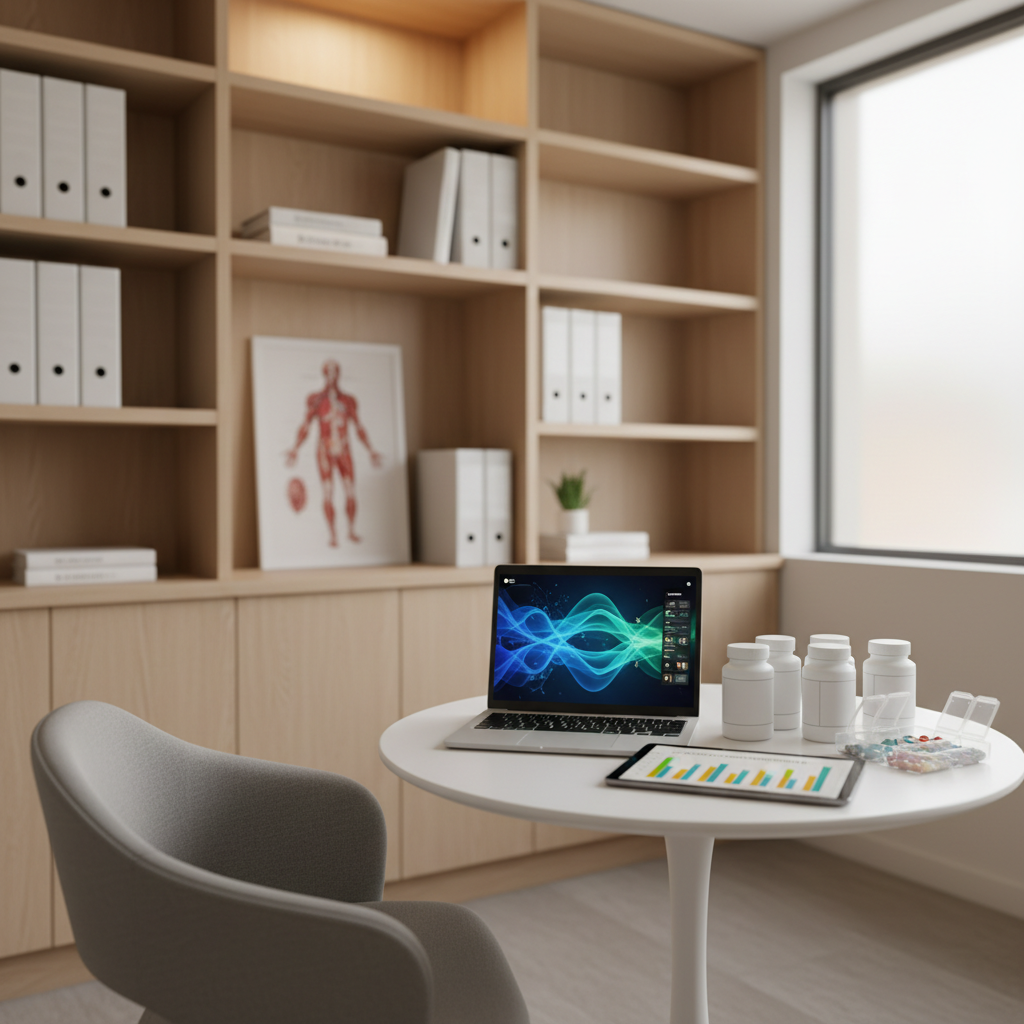
A modern clinical consultation room represented without people, where an ergonomic chair faces a small round table neatly arranged with an open laptop showing abstract AI interface graphics, a tablet with a medication adherence chart, and a tidy assortment of unbranded pill bottles and a weekly pill organizer. The background shows built-in shelving with binders, reference books, and a framed anatomical illustration, all kept text-free. Warm, soft overhead lighting and a hint of daylight from a frosted window create a balanced, reassuring glow. Captured at eye level in photographic realism, with a shallow depth of field that keeps the table in sharp focus and the background softly blurred, the mood is calm, collaborative, and patient-centered, emphasizing thoughtful medication therapy management.

Hope D.

The CE module on deprescribing was concise, evidence-based, and practical—I walked away with concrete steps to improve our ambulatory MTM workflows.

A high-tech yet realistic clinical command center focused on pharmacy and healthcare systems, with wall-mounted displays showing abstracted patient flow diagrams, medication safety dashboards, and color-coded alerts, all intentionally free of readable text. In the foreground, a large clean desk holds a keyboard, a mouse, and a notebook open to a page of schematic process sketches. Cool, even LED lighting illuminates the room, reflecting off glass and brushed metal surfaces to create a precise, analytical atmosphere. Shot from a slightly elevated angle with deep focus, the photographic image highlights the integration of data, workflows, and medication optimization, conveying systems thinking and professional oversight without showing any people.

Hope D.

As a new clinical pharmacist, the systems-thinking frameworks here gave me language to advocate for safer, more sustainable staffing and verification processes.

A sleek, organized clinical pharmacy workstation without any people, featuring dual computer monitors displaying abstract graphs and medication icons, a tidy counter with clearly labeled pill bottles, unit-dose blister packs, and a barcode scanner resting beside a compact laminar airflow hood. The scene is set in a modern hospital pharmacy with clean white cabinetry and subtle blue accents. Cool, diffused overhead lighting creates soft reflections on the stainless-steel surfaces and polished countertop, emphasizing a calm, controlled environment. Photographic realism at eye level with a slightly wide angle, showcasing depth into the room where automated dispensing cabinets and shelving fade into a gentle bokeh, conveying professional credibility, safety, and systems-level organization.

Hope D.

Collaborating on an AI-in-pharmacy project with One Rx Doctor pushed our team to design tools that support—not replace—clinical judgment.